When the clock strikes midnight on New Year’s Eve, corks pop all around the world. A glass of bubbly is simply part of the tradition. But which bottle should it be? Champagne is the classic choice, yet Crémant, Cava, Franciacorta, Prosecco, and Sekt can be just as festive, often for a fraction of the price.
This guide helps you find the right sparkling wine for your New Year’s Eve, whether you plan a quiet dinner or a big party. It also covers how many bottles to buy, how to serve them, and which snacks go best with bubbles:
HOW TO CHOOSE THE RIGHT BUBBLY FOR NEW YEAR’S EVE
Before you head to the wine shop, answer three simple questions:
- How many guests are coming? For a small group, a bottle of fine Champagne is a great treat. For a big party, an affordable Prosecco, Cava, or Crémant lets you pour generously without breaking the bank.
- Dry or sweet? The label tells you how sweet a sparkling wine is. Brut Nature and Extra Brut are bone-dry, and Brut is dry. Confusingly, Extra Dry is a bit sweeter than Brut, and Demi-Sec is noticeably sweet. Most people enjoy a Brut for the midnight toast.
- Toast or whole evening? If you only open a bottle at midnight, it can be something special. If bubbles accompany the whole evening, choose a wine that also works with food.
Not sure about the differences between the styles? This overview of the most popular types of sparkling wine gives you a quick introduction.
THE BEST SPARKLING WINES FOR NEW YEAR’S EVE
Classic Champagne for the Midnight Toast
Nothing says celebration like a bottle of Champagne. Only sparkling wines from the Champagne region in northeastern France may carry this name. They undergo a second fermentation in the bottle, which creates fine, persistent bubbles and aromas of brioche, citrus, and green apple. For the midnight toast, a non-vintage Brut from one of the big Champagne houses is a safe and delicious bet.
- type: white, sparkling
- origin: Champagne, France
- varietal: Chardonnay, Pinot Noir
- alcohol: 12.0%
Veuve Clicquot Yellow Label Brut
- type: white, sparkling
- origin: Champagne, France
- varietal: Chardonnay, Pinot Noir, Pinot Meunier
- alcohol: 12.0%
- type: white, sparkling
- origin: Champagne, France
- varietal: Chardonnay, Pinot Noir, Pinot Meunier
- alcohol: 12.5%
Prestige Champagne for a Big Celebration
If the past year gave you a reason to celebrate in style, treat yourself to a prestige cuvée. These are the flagship wines of the Champagne houses, made from their best grapes and aged for many years before release. The result is a sparkling wine with remarkable depth and complexity. Prestige cuvées are expensive, though, so save them for a small group of wine lovers who will appreciate them.
- type: white, sparkling, Vintage
- origin: Champagne, France
- varietal: Chardonnay, Pinot Noir
- alcohol: 12.5%
Krug Grande Cuvée 173ème Édition
- type: white, sparkling, brut
- origin: France, Champagne
- varietal: Chardonnay, Pinot Noir, Pinot Meunier
Rosé Champagne
Rosé Champagne adds a splash of color to your New Year’s party. Most producers blend a small amount of red wine into the white base wine, while others leave the juice in contact with the red grape skins for a short time. Rosé Champagne offers aromas of red berries and pairs surprisingly well with food, from smoked salmon to roast duck.
- type: rosé, sparkling
- origin: Champagne, France
- varietal: Chardonnay, Pinot Noir
- alcohol: 12.5%
Champagne Mouzon-Leroux L'Incandescent Rosé de Saignée Extra Brut
- type: rosé, sparkling
- origin: Champagne, France
- varietal: Pinot Noir
- alcohol: 12.0%
- type: rosé, sparkling, brut
- origin: France, Champagne
- varietal: Pinot Noir, Chardonnay, Pinot Meunier
- alcohol: 12.5%
Crémant: Champagne Method for Less
Crémant is made with the same traditional method as Champagne, but in other French regions such as Alsace, Burgundy, or the Loire Valley. Since the grapes and the land there are less expensive, a good Crémant costs much less than a comparable Champagne. That makes it an excellent pick for larger parties. Find out more in this comparison of Crémant and Champagne.
Christophe Mittnacht Crémant d'Alsace Extra Brut 2024
- type: white, sparkling, Vintage
- origin: Alsace, France
- varietal: Pinot Blanc, Pinot Gris, Pinot Noir, Riesling, Auxerrois
- alcohol: 12.0%
Bailly Lapierre Crémant de Bourgogne Reserve Brut
- type: white, sparkling
- origin: Burgundy, France
- varietal: Chardonnay, Pinot Noir
- alcohol: 12.0%
Victorine De Chastenay Rose Brut Crémant De Bourgogne
- type: rosé, sparkling
- origin: Burgundy, France
- varietal: Pinot Noir
- alcohol: 12.5%
Cava: Spain’s Festive Bubbles
Cava from Spain is another sparkling wine made with the traditional method. Most of it comes from the Penedès region near Barcelona. Cava is crisp and refreshing with notes of citrus, apple, and almonds. Reserva and Gran Reserva bottles age longer and develop richer, toasty flavors. In Spain, Cava is a must at midnight, often together with the tradition of eating twelve grapes as the clock strikes twelve.
Vins el Cep Kila Cava Brut 2023
- type: white, sparkling, Vintage
- origin: Catalonia, Spain
- varietal: Macabeo, Parellada, Xarel·lo
- alcohol: 12.0%
Avinyo Cava Reserva Brut Nature 2021
- type: white, sparkling, Vintage
- origin: Catalonia, Spain
- varietal: Macabeo, Parellada, Xarel·lo
- alcohol: 11.4%
Franciacorta: Italy’s Answer to Champagne
Franciacorta comes from Lombardy in northern Italy and is made with the traditional method, too. It typically spends a long time on its lees, which gives it a creamy texture and elegant aromas. The Satèn style is particularly soft because it has less pressure than other sparkling wines.
Le Marchesine Franciacorta Brut
- type: white, sparkling, Cuvée
- origin: Lombardy, Italy
- varietal: Chardonnay, Pinot Blanc, Pinot Noir
- alcohol: 12.5%
Berlucchi '61 Franciacorta Nature 2015
- type: white, sparkling, Cuvée Vintage
- origin: Lombardy, Italy
- varietal: Chardonnay, Pinot Noir
- alcohol: 12.5%
Ferghettina Franciacorta Rosé 2022
- type: rosé, sparkling, Vintage
- origin: Italy, Lombardy, Franciacorta
- varietal: Pinot Noir
- alcohol: 12.5%
Barone Pizzini Saten Franciacorta 2019
- type: white, sparkling, Satèn Vintage
- origin: Lombardy, Italy
- varietal: Chardonnay
- alcohol: 12.0%
Prosecco for Big Parties
Prosecco from northeastern Italy is the go-to sparkling wine for big gatherings. Unlike Champagne, it undergoes its second fermentation in large steel tanks. This keeps the fresh, fruity aromas of pear, apple, and white flowers. Prosecco is light, uncomplicated, and affordable. It is also a great base for sparkling cocktails. Learn more in this comparison of Champagne and Prosecco.
- type: white, sparkling
- origin: Italy, Veneto
- varietal: Glera
- type: white, sparkling, brut
- origin: Italy, Veneto
- varietal: Glera
Nino Franco Rustico Valdobbiadene Prosecco Superiore
- type: white, sparkling
- origin: Italy, Veneto, Valdobbiadene
- varietal: Glera
Sekt: German Sparkling Wine
Germans love sparkling wine, and most of what they drink is Sekt. Quality Sekt is often made from Riesling or Pinot Noir and shows lively acidity and fresh fruit. For the best quality, look for bottles labeled “Winzersekt” or made with the traditional method.
Weingut Simon Mosel Brut Sekt 2022
- type: white, sparkling, Vintage
- origin: Germany, Mosel
- varietal: Riesling
- alcohol: 12.0%
Von Buhl Pfalz Rosé Brut Sekt 2019
- type: rosé, sparkling, Vintage
- origin: Pfalz, Germany
- varietal: Pinot Noir
- alcohol: 12.5%
Sweet Bubbles for Dessert
Not everyone enjoys dry sparkling wine. For guests with a sweet tooth, Moscato d’Asti is a wonderful alternative. The semi-sparkling wine from Piedmont is light, fruity, and low in alcohol, usually around 5 to 6% ABV. It is also a perfect match for desserts and any Christmas cookies that are still left.
- type: white, semi-sparkling, sweet
- origin: Italy, Piedmont
- varietal: Muscat
- type: white, semi-sparkling, sweet
- origin: Italy, Piedmont
- varietal: Muscat
Michele Chiarlo Nivole Moscato d'Asti 2025
- type: white, semi-sparkling, sweet
- origin: Italy, Piedmont
- varietal: Muscat
HOW MANY BOTTLES DO YOU NEED?
A standard 750 ml bottle fills about six glasses. Use this rule of thumb to plan your purchase:
- For the midnight toast only: one bottle for every six guests.
- For bubbles throughout the evening: half a bottle per guest.
It is always better to have one bottle too many than too few. Unopened sparkling wine keeps well, so any leftovers can wait for the next celebration.
HOW TO SERVE SPARKLING WINE ON NEW YEAR’S EVE
Chill It to the Right Temperature
Sparkling wine tastes best at a serving temperature between 45 and 50°F (7–10°C). Put the bottles in the fridge for about three hours, or in an ice bucket filled with water and ice for about 20 minutes. Avoid the freezer, though. It is too easy to forget a bottle there.
Open the Bottle Safely
A sparkling wine cork is under high pressure and can fly off at dangerous speed. To open the bottle safely:
- Keep your thumb on the cork while you remove the foil and the wire cage.
- Hold the bottle at a 45-degree angle, pointing away from your guests.
- Cover the cork with a towel, hold it tight, and slowly turn the bottle, not the cork.
The cork should come out with a soft sigh instead of a loud pop. That way, no wine is lost.
Choose the Right Glasses
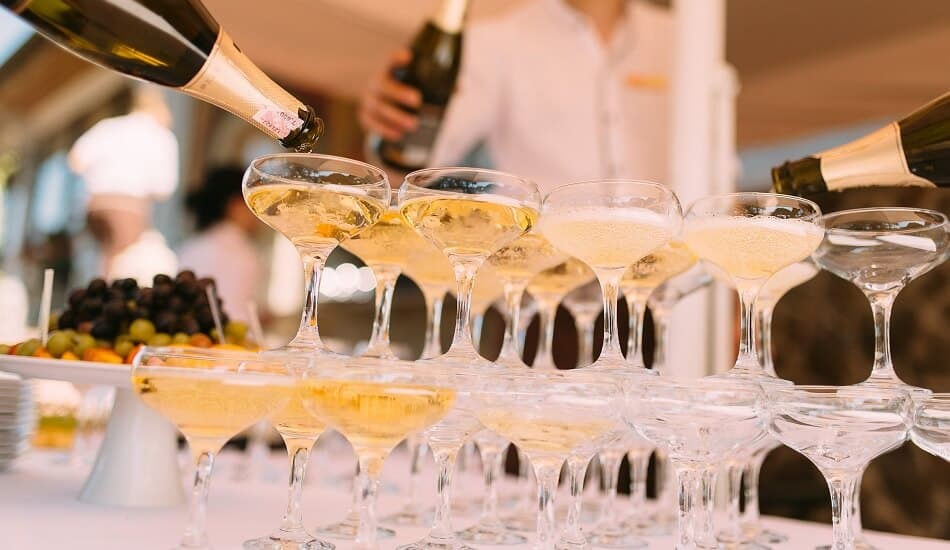
The classic Champagne flute keeps the bubbles alive for a long time. Many wine lovers prefer a tulip-shaped glass, though, as its wider bowl lets the aromas unfold. Coupe glasses look glamorous but let the bubbles escape quickly. Learn more in this guide to wine glasses.
Keep Leftovers Fresh
If a bottle is not empty after midnight, close it with a sparkling wine stopper and put it back in the fridge. This way, the bubbles last for one to three days. For longer storage, consider a wine preservation system.
FOOD PAIRINGS FOR NEW YEAR’S EVE
Sparkling wine is one of the most food-friendly wines. Its acidity and bubbles cleanse your palate, which makes it a great partner for many party snacks:
- Oysters and other seafood go perfectly with a dry Brut Champagne or Crémant.
- Smoked salmon pairs well with rosé Champagne or Franciacorta.
- Fried snacks, chips, and popcorn love crisp Cava and Prosecco.
- Soft cheeses like Brie match Champagne and Sekt. Find more ideas in this guide to wine and cheese pairings.
- Desserts call for a sweet Moscato d’Asti or a Demi-Sec sparkling wine.
FINAL WORDS
No matter which bottle you choose, the most important ingredient of a great New Year’s Eve is the people you share it with. With the tips from this article, you are ready to pick the perfect bubbles for your midnight toast. Happy New Year!